How I bought my first buy-to-let, and run my business the lazy way
Part 1 of a series — a first-time landlord's real story of buying a below-market-value flat in Aberdeen after the oil price crash.
A bit about me
I'm Czech, in my 40s, and I work in construction. I never had much money or a real plan, but I always wanted to be financially free. I spent years travelling, looking for the perfect place to live, and eventually realised there isn't one. Despite the weather, I've settled in Edinburgh.

What I learned from property courses
One day I came across a property training course from one of the leading property educators in Scotland, and I was hooked. The trouble is, these courses always cost a lot of money. I'll share what I've learned here for free instead. I signed up for a few courses myself and, I'll be honest, I overpaid and never got very far with them. That's my first bit of wisdom to share: property courses and coaching are expensive, and it's easy to overspend without much to show for it. I'm not saying property education is bad, but if you go down that route, choose carefully and take your time. Ignore limited-time offers and countdown discounts, they're just selling tactics. Also, make sure you learn from people with local experience. Markets are different across the UK, and you don't want to be travelling far for events. I've made that mistake myself.
How I found the deal
I found my first property through a sourcer, someone who finds deals and passes them on for a fee. It was an off-market flat in Aberdeen, discounted by around 30%, which was essential to my strategy: buy, refurbish, refinance, repeat (BRRR).
Why Aberdeen
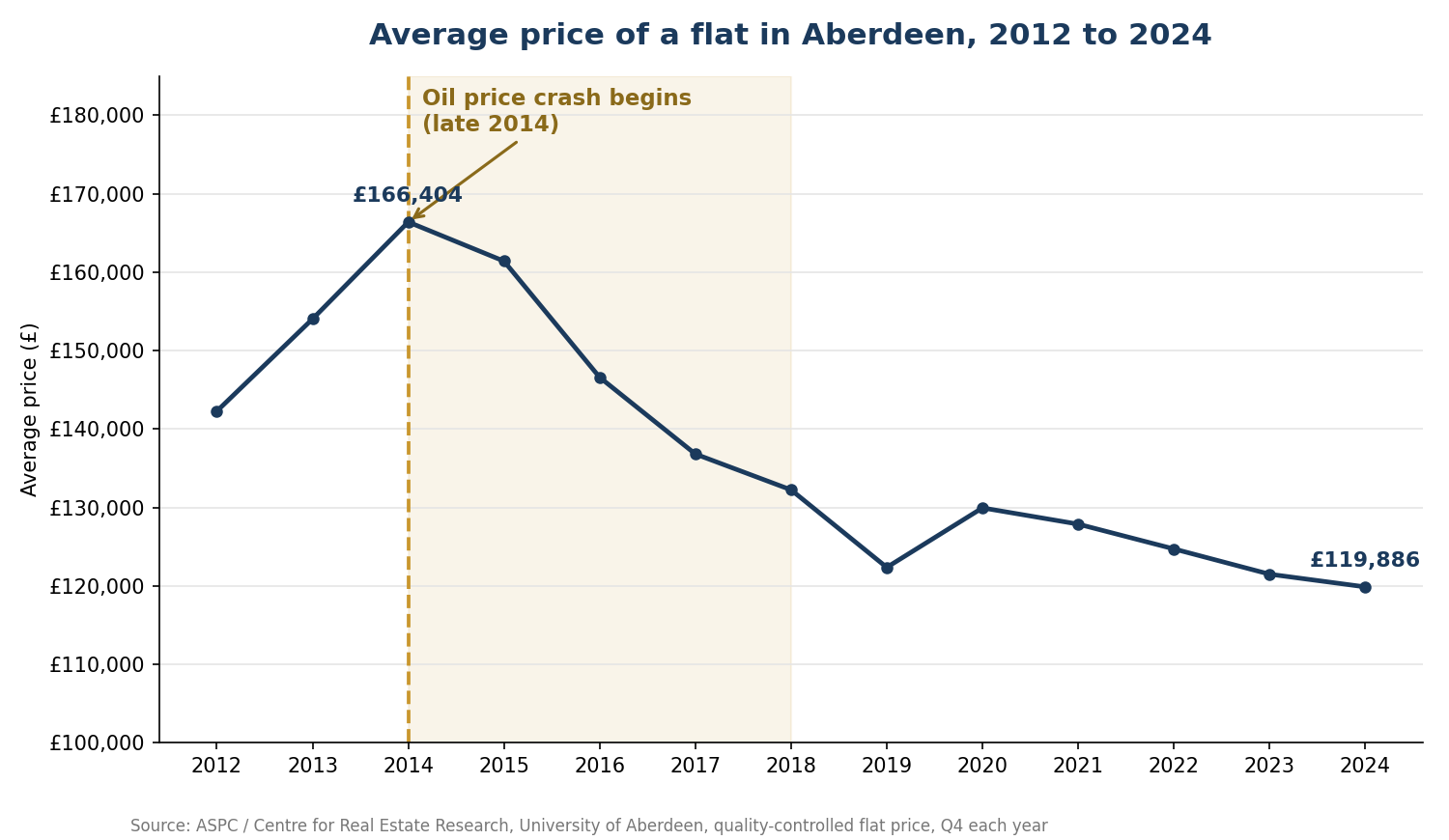
Because of the oil price crash. Aberdeen's economy runs on oil and gas, and when oil prices collapsed in 2014-15, thousands of jobs in the industry went with it. House prices fell hard and kept falling for years afterwards. The average flat in the city dropped from around £166,000 in 2014 to under £120,000 by 2024, a fall of 28%, and prices are still edging down even now. For sellers that's bad news. For a buyer, it means real below-market-value deals exist, not just a sales pitch.
Making the offer
I offered £50,000 and the seller accepted. At that point I was still working full time in construction, just as I am today, and this was the first property I had ever owned. It was an exciting moment, and a small first step towards becoming financially independent.
The legal side
Getting through the legal side was the first challenge. My solicitor sent over quite a few documents, and going through them was hard work. I remember reading them and having no idea what half of it meant. It genuinely read like a different language. I asked for it to be explained in plain terms, and once it was, it made a lot more sense. If you're buying your first property, don't be afraid to ask your solicitor to explain anything you don't understand. That's what they're there for. Choose your solicitor carefully. A good one makes the whole process easier.
Funding the deposit
I put together £12,500 from three places: £6,000 in savings from my job, £4,850 from an investment account I closed, and £2,000 on a credit card. The rest of the purchase, £37,150, came from a bridging loan. Bridging finance is short-term and more expensive than a normal mortgage, but it let me move fast on a deal that needed cash quickly, and it's also part of the BRRR strategy. The plan from the start was to refinance onto a standard buy-to-let mortgage once the property was sorted.

What's next
Next: refurb and refinancing.